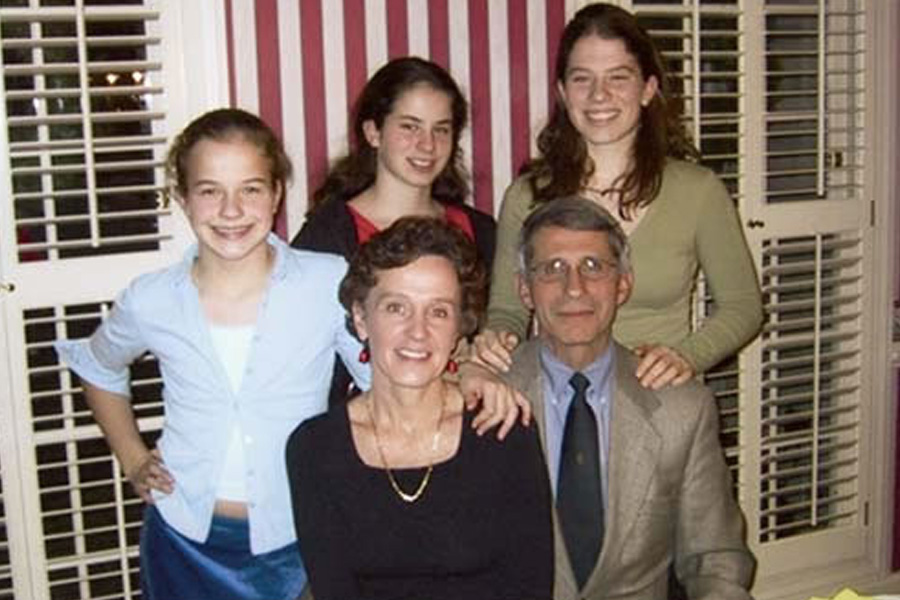
A Family Shaped By Service
Megan Fauci occupies a quiet but meaningful corner of a prominent American family. She is the middle daughter of Dr. Anthony Fauci and Dr. Christine Grady. Her life has unfolded with restraint, discipline, and civic purpose. While her parents became familiar to the public, she chose a more discreet vocation. That choice reveals a temperament inclined toward utility rather than acclaim.
Her family background is steeped in medicine, ethics, and public duty. Dr. Anthony Fauci built a consequential career in infectious diseases and public health. Dr. Christine Grady became known for clinical bioethics and patient centered reflection. Those influences formed a household where service was not ornamental. It was ordinary, expected, and deeply practiced.
That environment did not produce theatrical ambition. Instead, it fostered a measured orientation toward work that helps others. Megan’s path reflects that inheritance with unusual fidelity. She appears to value steadiness over spectacle. In an age of conspicuous self branding, that preference feels almost contrarian.
Early Years In Washington DC
Megan grew up in Washington, D.C., where public life and private discipline often coexist. The city provided a formative backdrop of institutions, debate, and national urgency. Yet her upbringing remained grounded in routine and family cadence. That balance likely shaped her practical sensibility. It also helped cultivate a durable respect for responsibility.
Her schooling began at the National Cathedral School. The institution is known for academic rigor and a service minded ethos. Such an environment rewards focus, diligence, and intellectual aplomb. For a student like Megan, it likely reinforced habits of precision. It also prepared her for demanding higher education.
The trajectory from Washington schooling to a prominent university was unsurprising. Megan later attended Johns Hopkins University. That setting is associated with exacting scholarship and civic minded inquiry. Her educational arc suggests both ambition and purpose. She seems to have pursued knowledge as a tool, not a trophy.
Education With A Practical Bent
Megan’s academic formation appears to have been serious and deliberate. The combination of National Cathedral School and Johns Hopkins University is notable. Both institutions prize rigor, discipline, and intellectual seriousness. Together, they suggest a person comfortable with high standards. They also suggest a preference for substance over ornament.
Education can produce many kinds of careers. In Megan’s case, it led toward classroom service. That decision matters because it resists the seduction of prestige. Teaching demands patience, adaptability, and emotional literacy. It also requires constancy, which is often undervalued.
Her path indicates a clear throughline. She moved from strong schooling into service, then into teaching. That sequence feels coherent and unforced. It does not read like a detour. It reads like vocation.
The following table summarizes her formative educational markers.
| Stage | Institution or Experience | Notable Feature |
|---|---|---|
| Schooling | National Cathedral School | Rigorous academics and service culture |
| Higher Education | Johns Hopkins University | Elite scholarship and practical seriousness |
| Early Service | City Year | Education focused national service |
| Professional Direction | Elementary teaching | Direct community impact |
Service Through City Year
After college, Megan joined City Year. That choice placed her inside the daily realities of public education. City Year is known for immersive service in schools. It gives young adults direct exposure to classroom needs. For Megan, it likely served as a crucible.
Such service years are often transformative. They compel participants to confront complexity without abstraction. The work is immediate, relational, and demanding. It can sharpen judgment and deepen empathy. It also reveals whether service is a passing sentiment or a lasting commitment.
Megan’s decision to enter City Year aligns with her broader pattern. She seems to favor practical involvement over rhetorical display. That inclination is often the mark of a serious educator. It is also a sign of durable character. In service settings, character quickly becomes visible.
City Year may have functioned as a bridge. It connected her academic foundation to classroom labor. That bridge is important because it narrows the gap between theory and action. Many speak about education. Fewer enter it directly. Megan appears to belong to the smaller group that steps forward.
Teaching In New Orleans
Megan later taught elementary school in New Orleans. That city has a rich cultural texture and an intricate educational landscape. Teaching there requires flexibility, patience, and resolve. It also requires a strong moral compass. The work is never merely administrative.
Elementary teachers shape foundational learning. They help children master reading, arithmetic, and social habits. They also build confidence in students who are still discovering themselves. This is slow, meticulous work. Its effects often appear long after the lesson ends.
New Orleans schools have endured reform pressures, civic scrutiny, and persistent challenges. In such a setting, an elementary teacher must be both inventive and steadfast. Megan’s role suggests exactly that kind of disposition. She entered a demanding environment and chose persistence. That choice speaks louder than publicity ever could.
Teaching is a profession of cumulative consequence. One teacher may influence dozens of students each year. Across several years, the effect expands substantially. Megan’s work therefore has an exponential quality. Its value cannot be captured by headlines.
Family Ties And Distinct Paths
Megan’s sisters also followed distinctive professional routes. Jennifer, often called Jenny, pursued psychology and clinical work. Alison, often called Ali, moved from Stanford rowing into technology. The three sisters represent varied expressions of competence. Each path is distinct, yet each reflects disciplined service.
Their mother, Christine Grady, contributed a bioethical framework to the family atmosphere. Their father, Anthony Fauci, modeled public responsibility under intense scrutiny. Together, those influences created a household where rigor was normal. It is unsurprising that each daughter found a serious vocation. The family’s common thread is efficacy with conscience.
This table outlines the family at a glance.
| Family Member | Relationship | Noted For |
|---|---|---|
| Dr. Anthony S. Fauci | Father | Infectious disease leadership and public health service |
| Dr. Christine Grady | Mother | Nurse bioethics and clinical ethics |
| Jennifer Fauci | Older sister | Psychology and clinical focus |
| Megan Fauci | Subject | Education and elementary teaching |
| Alison Fauci | Younger sister | Stanford rowing and technology career |
The sisters’ independence is noteworthy. They did not cluster around one career model. Instead, they created separate avenues of contribution. That variety suggests familial confidence. It also suggests a home that respected individual calling. Megan’s classroom life belongs to that same lineage.
Public Presence And Privacy
Megan Fauci is not a conventional public figure. Her life has not been organized around visibility. She maintains a limited social footprint and a low profile. That privacy should be understood as a choice, not a deficit. It indicates a deliberate refusal of unnecessary exposure.
Public mention of her typically arises through family profiles. Those references usually remain concise and respectful. The available picture is therefore modest. She is a private individual with a professional life in education. That is sufficient, and perhaps preferable.
Privacy can be an ethical posture. It preserves attention for the work itself. In Megan’s case, that work is teaching children. The classroom does not reward vanity. It rewards consistency, clarity, and humane attention. Her reticence seems well matched to that environment.
Public Milestones And Measured Progress
Megan’s public milestones form a compact timeline. The sequence is notable for its lack of melodrama. Each phase follows the next with calm inevitability. That kind of progression is often more authentic than dramatic reinvention. It also reveals a coherent professional identity.
| Period | Milestone |
|---|---|
| Early to mid 2000s | Studies at National Cathedral School |
| Late 2000s | Undergraduate years at Johns Hopkins University |
| Post graduation | Service year with City Year |
| 2010s | Elementary teaching in New Orleans |
| 2020s | Occasional mentions during increased attention on her father |
The timeline suggests a life built incrementally. First came rigorous schooling. Then came service. Then came long term teaching. Each stage appears connected by a shared ethic. That ethic favors usefulness, not ornament.
Key Takeaways
Megan Fauci’s story is best understood through service, education, and privacy. She chose a classroom rather than a spotlight. She also chose steady contribution over public performance. That combination gives her path unusual moral clarity.
Her upbringing in a distinguished family did not produce imitation. It produced independence within a service oriented frame. Her sisters pursued their own serious professions. Her parents modeled public responsibility and ethical seriousness. Megan translated that inheritance into teaching.
Her work in New Orleans matters because it is both local and generative. Elementary teaching shapes futures in subtle, durable ways. It is a profession of patience, exactitude, and trust. Megan’s career reflects those virtues with consistency. Her path stands as a quiet testament to purpose.


