Early Life and Academic Formation
Chris Leist was born in Massachusetts on June 18, 1991. His upbringing appears rooted in a disciplined, civic-minded household. Public details about his childhood remain sparse, which suits his generally reticent profile. That scarcity of detail has not prevented observers from sketching a coherent professional arc. The available record suggests early interest in public service, organizing, and strategic communication. He later attended Syracuse University, where he earned a Bachelor of Arts in Political Science and Policy Studies in 2014. That combination of policy analysis and political practice provided a sturdy foundation for campaign work. It also suited the logistical rigor needed in field operations and digital political advertising. His education likely sharpened both analytical judgment and practical discipline.
Leist’s background reflects a transition common among campaign professionals. Many begin with direct voter contact before moving into specialized strategy. His trajectory followed that pattern with uncommon clarity. The academic setting gave him vocabulary, structure, and theoretical framing. Campaign labor gave him urgency, repetition, and tactical awareness. Together, those experiences formed a professional identity that would later support digital leadership. His later work shows a consistent preference for measurable outcomes. That habit likely traces back to his formative years in politics and education.
Field Work and Early Campaign Experience
Leist entered politics through organizing, not polish. In 2012, he worked as a Field Organizer for Obama for America. That role demanded endurance, persuasion, and local fluency. Field organizing often rewards speed, composure, and a practical sense of human behavior. Those are not abstract traits. They are learned under pressure in real communities. Leist also worked on Massachusetts campaigns in 2013 and 2014. His regional and interim responsibilities suggest a growing command of operational detail. He handled petitions, field coordination, and regional planning. Those jobs require a person to manage both process and temperament.
His early campaign work likely sharpened his understanding of political participation. A field organizer sees how turnout depends on repetition, timing, and trust. A regional operator sees how campaigns depend on disciplined logistics. These roles are less glamorous than public-facing political work. They are, however, structurally decisive. Leist appears to have absorbed that lesson early. His subsequent digital career shows the same operational instinct in a new medium. He moved from knocking on doors to shaping audience behavior online. That shift was not abrupt. It was evolutionary.
Digital Career Development
By the mid 2010s, Leist had shifted from field operations into digital strategy. He joined Rising Tide Interactive as an Online Advertising Coordinator in 2015 and 2016. That period coincided with major political fundraising and audience acquisition efforts. His work helped contribute to substantial campaign results in the 2016 cycle. The reported figures included roughly $7.5 million raised and about 1.7 million supporters acquired. Those numbers indicate sophisticated targeting and disciplined execution. In digital campaigns, results like those require close coordination between strategy, creative, and data analysis.
Leist later moved to Mothership Strategies, where he advanced from strategist to Deputy Director of Advertising. That progression matters. It signals both competence and trust. Digital advertising in politics demands constant calibration. Budgets shift quickly. Messaging must adapt to volatile attention patterns. Audience segmentation, paid social, and programmatic buying all require technical fluency. Leist’s rise indicates he was not merely executing instructions. He was helping shape them. By June 2021, he had become Senior Vice President, Digital at SWAY. That role placed him in a broader leadership position. He began overseeing digital infrastructure and managing large paid media operations. His responsibilities expanded from campaign execution to team formation and systems design.
The following table captures his career path in a compact form.
| Year(s) | Role | Organization | Notable Contribution |
|---|---|---|---|
| 2012 | Field Organizer | Obama for America | Voter mobilization on a national reelection campaign |
| 2013 to 2014 | Regional Field and Interim Roles | Massachusetts campaigns | Managed regional field operations |
| 2015 to 2016 | Online Advertising Coordinator | Rising Tide Interactive | Helped drive fundraising and supporter growth |
| 2016 to 2021 | Strategist to Deputy Director of Advertising | Mothership Strategies | Advanced progressive digital advertising work |
| 2021 to present | Senior Vice President, Digital | SWAY | Leads digital operations and paid media strategy |
Professional Specialties and Working Style
Leist’s specialization lies in digital political advertising. That field sits at the intersection of persuasion, analytics, and rapid iteration. He focuses on paid social, programmatic buys, audience segmentation, and creative testing. Those functions require both technical precision and political judgment. The strongest practitioners know how to balance message discipline with experimental flexibility. Leist appears to occupy that middle ground. He has also managed multimillion-dollar budgets. That scale implies accountability far beyond routine execution. Large ad spends require careful attribution, risk assessment, and performance review.
His professional profile also includes a modern technological sensibility. He has incorporated AI-driven targeting and automated optimization into campaign operations. That detail matters because it marks a shift in political communications. Campaigns increasingly depend on algorithmic efficiency and data-informed decision-making. Yet automation still requires human oversight. Leist’s role suggests he understands both the promise and the limits of these tools. He also appears attentive to staff development. Mentoring junior colleagues is not incidental in a high-turnover industry. It is part of building durable institutional knowledge. His work therefore spans not only delivery, but also organizational continuity.
Personal Life and Family Context
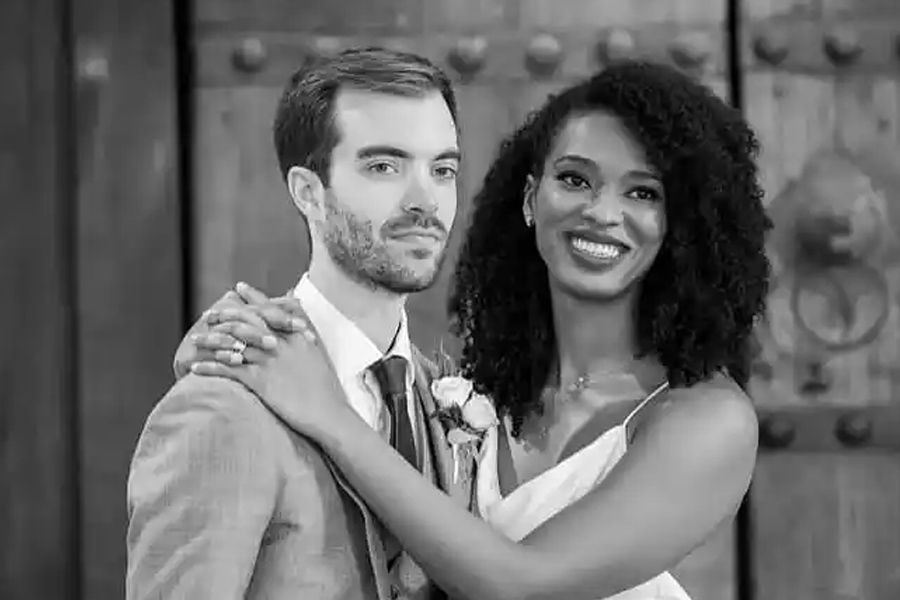
Leist’s personal life is public in limited, carefully framed ways. He married Juanita Tolliver on June 23, 2019. Their relationship began in the political world, where they met during the 2014 Martha Coakley gubernatorial campaign. That origin fits the broader pattern of campaign professionals whose personal and professional circles overlap. They live in Arlington, Virginia, and are known to value privacy. Public references to children remain inconclusive and unverified. That ambiguity reflects a deliberate boundary around family life.
His immediate family includes his mother, Emily Leist Vatis, and his sisters, Kate Leist and Erin Leist. Public biography does not disclose much else about his extended family. That restraint is consistent with his broader public posture. He does not present himself as a personality. He appears more comfortable as a practitioner. His life seems organized around work, family, and a selective relationship with visibility. Such a posture is increasingly unusual in contemporary political culture. It also appears intentional. There is little evidence of self-promotion beyond professional necessity. That alone distinguishes him from many others in adjacent roles.
Public Visibility and Financial Profile
Leist maintains a low public footprint. Most mentions of him appear through professional contexts or through his spouse’s public media presence. He is not known for elaborate social media branding or aggressive public commentary. Instead, he seems to inhabit a quieter lane within political communications. That relative obscurity is not a deficit. In many campaign environments, discretion is an asset. It can support trust, reduce distraction, and keep attention on outcomes rather than persona.
Public estimates place his net worth between $50,000 and $100,000. That range is modest, though not unusual for campaign and agency professionals. Political digital work often offers influence before wealth. Compensation is typically shaped by nonprofit structures, agency economics, and election-cycle volatility. Leist’s reported finances therefore fit his career path. They also reinforce the impression that his professional priorities lie elsewhere. His record centers on execution, competence, and advancement within specialized campaign work. Money appears secondary to that larger pattern. The available evidence supports a portrait of a disciplined operator rather than a conspicuous public figure.
Key Takeaways
Chris Leist’s career follows a clear line from field organizing to digital leadership. He began with voter contact, moved into regional campaign work, and then specialized in online advertising. That sequence gave him practical command of both grassroots politics and data-driven persuasion. He now serves as Senior Vice President, Digital at SWAY, where he oversees major paid media operations.
His background combines academic preparation, campaign experience, and technical adaptation. He has worked on national and state-level politics, helped manage large digital budgets, and contributed to major supporter acquisition efforts. At the same time, he has preserved a notably private personal profile. His marriage to Juanita Tolliver, his family ties, and his limited public presence show a deliberate separation between public work and private life.
The most defining feature of Leist’s profile is probably not any single role. It is continuity. His career reflects sustained commitment to political operations, digital strategy, and institutional discipline. He has built a professional life that is visible in results rather than spectacle.