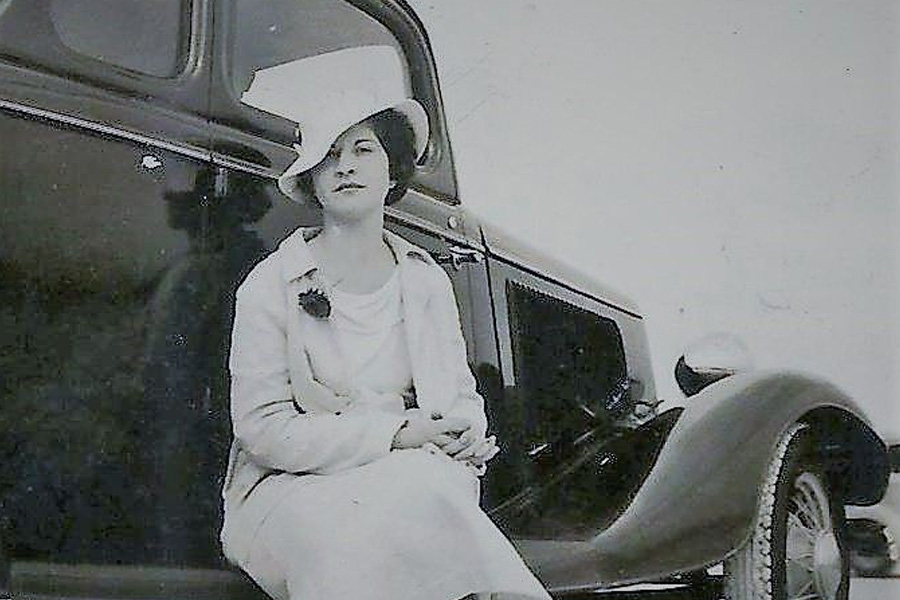
A Coalfield Life Rooted in Resolve
Elsie Gardener Hickam lived a long, layered life. She was born on June 15, 1912, near Gary, West Virginia. Her birth name was Elsie Gardener Lavender. That name belonged to the coalfields, where family ties mattered as much as wages. She grew up amid labor, discipline, and stern expectations. Her world was practical, narrow, and often unforgiving. Yet she carried herself with uncommon stubbornness. That quality would shape her family for decades.
She graduated from Gary High School in 1930. That year stood on the edge of the Great Depression. Many young people faced shrinking prospects and hard choices. Elsie entered adulthood inside that tightening economic climate. Her life did not unfold in comfort. It unfolded in endurance. She learned how to adapt without surrendering her own will. That trait made her memorable within her family and community.
Elsie later lived in Coalwood, West Virginia, for many years. Coalwood was a company town with rigid rhythms. Work defined daily life. The mine shaped homes, routines, and expectations. Women carried heavy domestic burdens there. They also sustained social and spiritual networks. Elsie became one of the women who held that fragile structure together. She did so quietly, but with force.
The Lavender Family and Early Influences
Elsie came from the Lavender family, which formed the nucleus of her early identity. Her parents were James Kent Lavender and Minnie Lee Bouldin Lavender. In simpler references, they appear as James and Minnie Lavender. Both names belong to the same lineage of memory. Her siblings also shaped her outlook. She had brothers Kenneth, Joe, Charlie, Victor, and James Kent Lavender. She had a sister, Mary Lavender. Large families often produce sharp awareness and fast judgment. Elsie likely learned both early.
Family life in such households could be crowded and exacting. Resources were limited. Attention was shared. Each child needed a voice. Elsie seems to have developed a determined one. She had to navigate among brothers and sisters. She had to assert herself without waste. That sort of upbringing often produces resilience. It also produces social acuity. Elsie appears to have had both.
The Lavender family did not become famous in a grand public sense. Still, they gave Elsie her foundation. Temperament can be inherited in subtler ways than money or property. Habits of thought pass through households. So do habits of courage. Elsie seems to have carried forward a family instinct for survival. She also carried a willingness to imagine more.
Marriage to Homer Hickam Sr
Elsie married Homer Hickam Sr., a mine superintendent in the Olga Coal Company system. Their marriage was shaped by coal town realities. It also appears to have been marked by friction. Both partners seem to have possessed strong wills. That can make a household volatile. It can also make it durable. Elsie was not a passive spouse. She was a visible presence. She knew how to contest, persuade, and persist.
There is also a suggestion of a more expansive youth. One story places her in Florida after high school. Another thread links her to Orlando and a meeting with Buddy Ebsen. Whether remembered in exact detail or family legend, such episodes matter. They imply movement beyond West Virginia. They suggest a young woman exposed to broader horizons. That matters because it frames her later life differently. She did not simply remain in Coalwood by inertia. She returned. That choice may have been practical, emotional, or both.
Her life with Homer Hickam Sr. was tied to the machinery of company-town existence. Money, hierarchy, and reputation all mattered. The household depended on careful management. Elsie seems to have understood the value of thrift. She also understood the limits placed on women of her era. She worked within those limits, but never seemed to love them. Her independence remained visible. In family memory, she emerges as a woman who kept thinking beyond the walls around her.
Her Children and a Lasting Family Legacy
Elsie and Homer Hickam Sr. had two sons. Their lives followed very different courses. Both, however, reflected the influence of their mother. She appears to have pushed them toward education, discipline, and possibility. That influence became part of the Hickam family legacy.
| Family Member | Relationship | Notable Detail |
|---|---|---|
| James Kent Lavender | Father | Part of her core family line |
| Minnie Lee Bouldin Lavender | Mother | Also known as Minnie Lavender |
| Kenneth Lavender | Brother | Predeceased her |
| Joe Lavender | Brother | Predeceased her |
| Charlie Lavender | Brother | Predeceased her |
| Victor Lavender | Brother | Predeceased her |
| James Kent Lavender | Brother | Predeceased her |
| Mary Lavender | Sister | Lived in Mount Airy, North Carolina |
| Homer Hickam Sr. | Husband | Mine superintendent |
| James Venable Hickam | Son | Football coach in Roanoke, Virginia |
| Homer Hadley Hickam Jr. | Son | NASA engineer and author |
James Venable Hickam, often called Jim Hickam, built a career in coaching. He became a long-time football coach at Northside High School in Roanoke, Virginia. His path reflected structure, mentorship, and local influence. He married Betty Laphew. His life remained rooted in service to younger generations. That kind of work requires patience and authority. Those are traits Elsie likely valued deeply.
Her younger son, Homer Hadley Hickam Jr., became the more publicly known child. He worked as a NASA engineer. He later became an author. His memoirs and related writings brought Coalwood into national memory. Through him, Elsie’s life entered literature and film culture. She became part of a larger American narrative about aspiration and escape. Yet she was never merely a supporting detail. She was one of its engines.
Elsie’s role as a mother appears central. She was not content with mere maintenance. She wanted advancement. She seems to have believed education could enlarge a child’s fate. That conviction mattered in Coalwood. It mattered in the long arc of both sons’ lives. She helped create a family story that moved beyond mining. That is no small achievement.
Community Work and Quiet Authority
Elsie left behind no formal institution bearing her name. Still, she contributed meaningfully to local life. She belonged to the Olga Woman’s Club. She also participated in the Coalwood Community Church Methodist Women’s Circle. These groups may sound modest. They were not. They sustained social continuity in difficult places. They handled practical needs, emotional support, and communal order.
She also helped raise money for local school programs. That kind of labor is often invisible. It happens in church basements, kitchens, and meeting rooms. Yet it shapes children’s lives. It strengthens local institutions. It builds a civic fabric. Elsie’s work belonged to that discreet sphere. She was not a ceremonial figure. She was a stabilizing one.
Her financial judgment also appears in family memory. Later accounts suggest she supported Homer Hickam Jr.’s college ambitions through careful planning. In her era, women often held assets indirectly. That made foresight essential. Elsie seems to have possessed it. She understood restraint. She understood postponement. She understood how to save for a future not yet visible. That is practical wisdom of a high order.
Memory, Story, and the Wider Public Imagination
Elsie became known far beyond Coalwood because her son wrote about family life. In those stories, she emerges as more than a mother. She appears as a persistent moral center. She is often restless, exacting, and deeply alive. That makes her compelling. She is not flattened into sweetness. She retains edge and complexity.
Her desire for Myrtle Beach also adds dimension to her memory. Coalwood could feel confining. The sea represented openness. It represented air, motion, and release. That contrast gives her story emotional resonance. She belonged to the mountains, yet she also reached toward elsewhere. Few details describe her better. She was loyal to family, but not sentimental about confinement. She knew the cost of staying. She also knew the seduction of departure.
Elsie lived until October 7, 2009. She died in Garden City, South Carolina, at age 97. Her long life spanned immense change. She saw the coal era dominate her youth. She saw the space age transform national imagination. She saw her family become part of a broader cultural memory. That arc gave her life unusual historical breadth. It also deepened her symbolic weight in the Hickam story.
Key Takeaways
Elsie Gardener Hickam was born in 1912 and shaped by the coalfields of West Virginia. She carried the Lavender family name before marriage and before public remembrance. She married Homer Hickam Sr. and raised two sons with distinct public lives. She supported education, community work, and local church life. She remained a forceful presence in family memory. Her story endures because she represented grit, aspiration, and quiet authority.
- Born June 15, 1912, near Gary, West Virginia
- Graduated from Gary High School in 1930
- Married Homer Hickam Sr., a mine superintendent
- Had two sons, Jim Hickam and Homer Hickam Jr.
- Supported church, school, and women’s community groups
- Lived later in Garden City, South Carolina
- Died October 7, 2009, at age 97